
A practical self-audit guide to identify inefficiencies and unlock more capacity in your front desk operations.
Most front desk bottlenecks aren't obvious — they build up gradually through manual workarounds, fragmented systems, and workflows that made sense when the practice was smaller.
This guide gives you a structured framework to evaluate your front desk across four critical areas, so you can identify where time and revenue are slipping through the cracks and take targeted action.
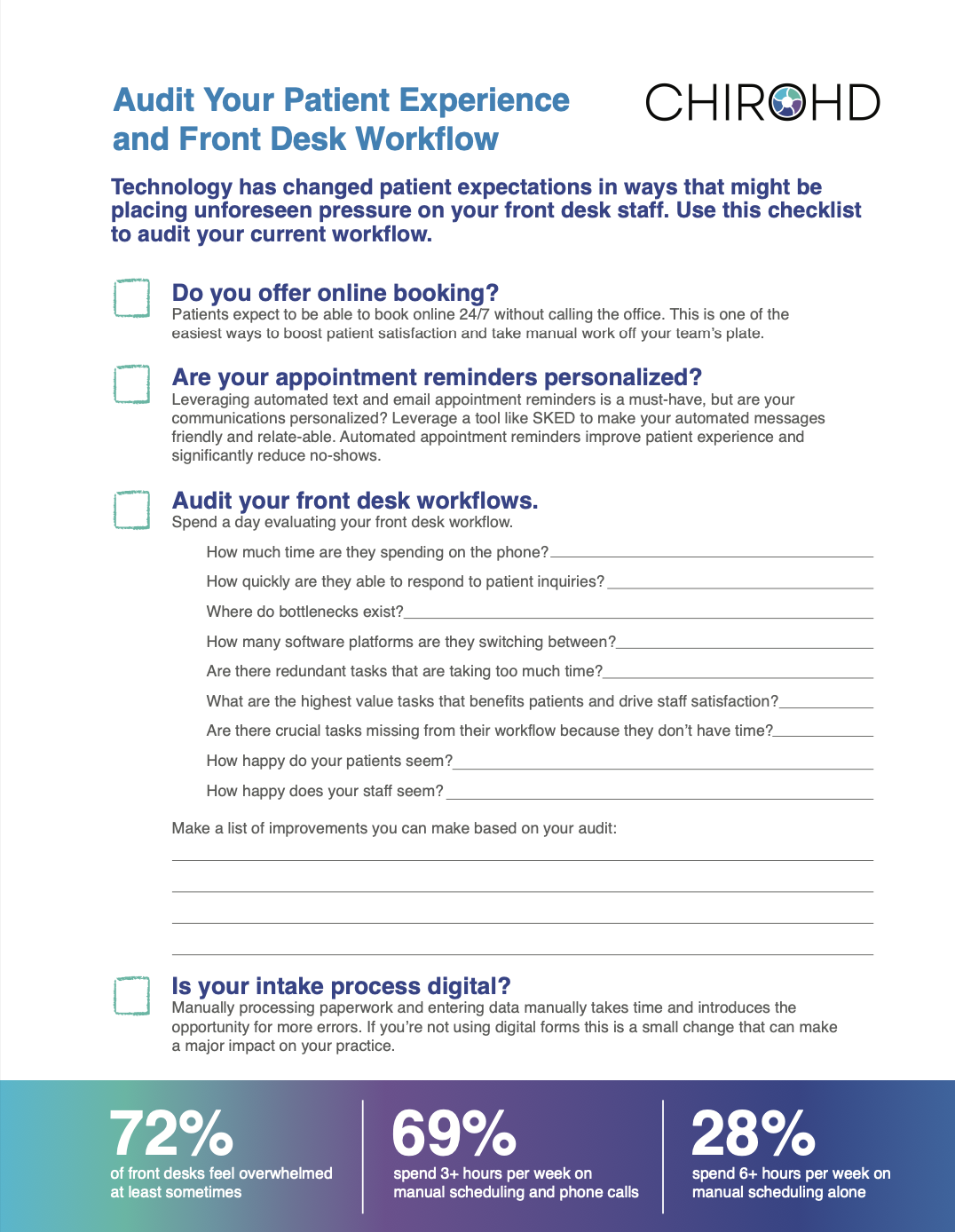
Fill out the form to access the guide instantly.
Four areas to evaluate where your front desk stands today.
Evaluate how appointments are booked, rescheduled, and filled — and where manual processes are creating unnecessary drag on your schedule.
Understand what patients expect from modern practice communication and how personalized outreach impacts retention and satisfaction.
Walk through a structured review of your day-to-day front desk processes to surface redundancies, gaps, and opportunities to streamline operations.
Learn what a modern intake process looks like and how digitizing intake reduces manual data entry while improving the new patient experience.
A front desk audit evaluates your scheduling processes, patient intake workflows, communication systems, and day-to-day operational habits to identify where manual effort is creating drag, where patients are falling through the cracks, and where automation could reduce staff workload.
Key indicators include frequent no-shows, schedule gaps, staff feeling overwhelmed, high volumes of phone calls for scheduling, manual data entry during patient intake, and inconsistent payment collection at the time of service.
An ideal intake process collects patient information digitally before the first visit and routes it directly into the EHR with no manual re-entry. This reduces front desk workload, minimizes errors, and improves the new patient experience.
Automated text and email reminders sent at strategic intervals before appointments are the most effective tool for reducing no-shows. Practices with two-way texting can also confirm attendance and fill last-minute cancellations more quickly.